
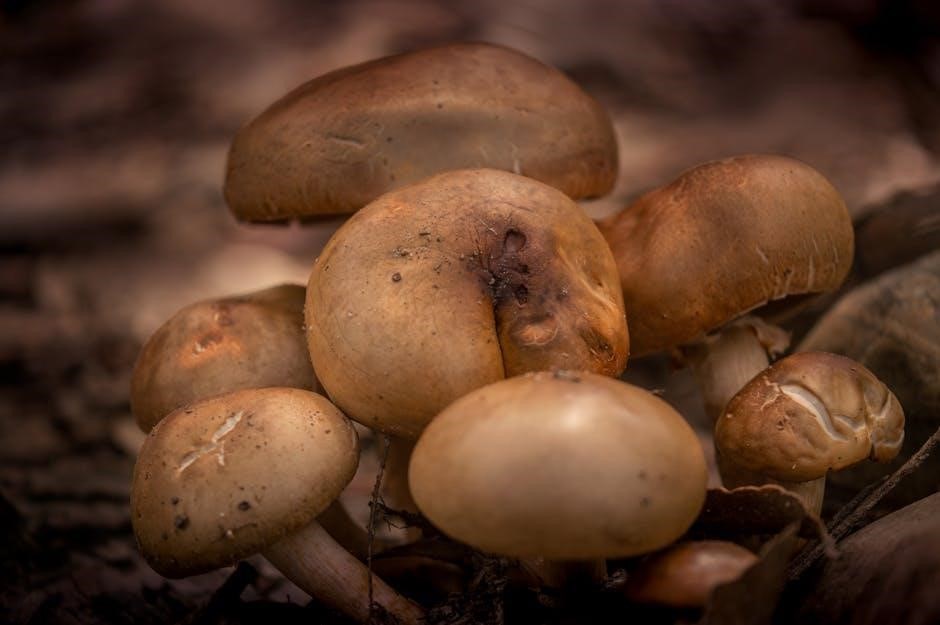
A field guide to Australian fungi is crucial for accurate species identification, promoting understanding of their ecological roles, and fostering responsible exploration.
What is a Field Guide and Why is it Important?
A field guide serves as a portable reference for identifying organisms in their natural habitat, and for Australian fungi, this is particularly vital. Given the immense diversity and often subtle differences between species, a well-structured guide simplifies the identification process.
These guides typically employ descriptive text alongside illustrations or photographs, focusing on morphological characteristics – shapes, textures, and colors – essential for accurate determination. Interactive keys, like FunKey, further streamline identification by guiding users through a series of questions.
Importantly, field guides aren’t just for experts; they empower citizen scientists and nature enthusiasts to contribute valuable data, aiding in broader fungal research and conservation efforts. Accurate identification is the cornerstone of understanding fungal ecology and distribution.
The Diversity of Australian Fungi
Australia boasts an extraordinarily diverse fungal flora, estimated to contain tens of thousands of species, many still unknown to science. This diversity spans a wide range of forms, from the familiar mushrooms and toadstools (Agarics) to intricate coral fungi (Clavarias & Ramarias), and less conspicuous resupinate and globular fungi.
The FungiOz website and app highlight this variety, showcasing Australian Boletes (Fungi-Boletes & Austroboletes) and other fascinating groups. Understanding this diversity requires specialized knowledge, making field guides essential.
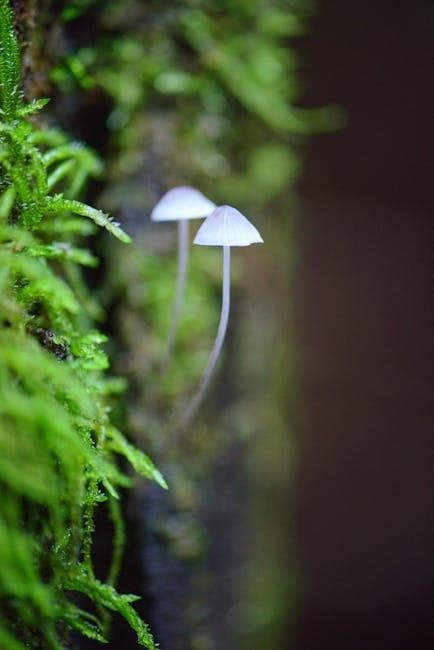
Furthermore, fungal identification is complicated by factors like seasonal variation and subtle morphological differences. Guides aid in navigating this complexity, enabling both amateur and professional mycologists to document and study Australia’s rich fungal heritage.
Key Groups of Australian Macrofungi
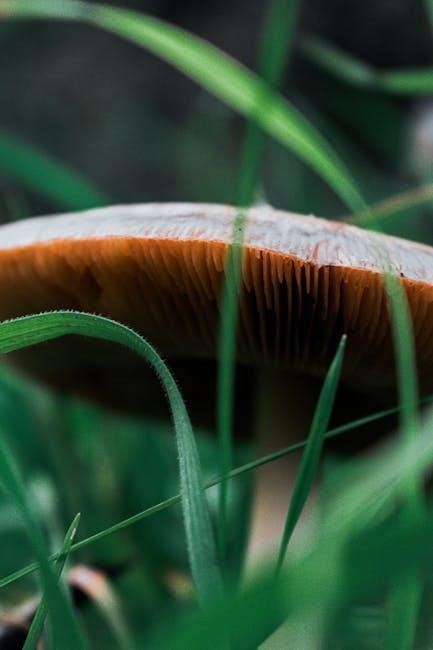
Australian macrofungi encompass diverse groups like Agarics, Boletes, Coral Fungi, Resupinate, and Globular Fungi, each requiring specific identification approaches.
Agarics (Mushrooms & Toadstools)
Agarics, commonly known as mushrooms and toadstools, represent a highly conspicuous and diverse group within Australian macrofungi. FunKey, an interactive guide, specifically focuses on aiding identification at the genus level for these fungi. Characterized by the presence of lamellae (gills), agarics exhibit a wide range of shapes, sizes, and colors.
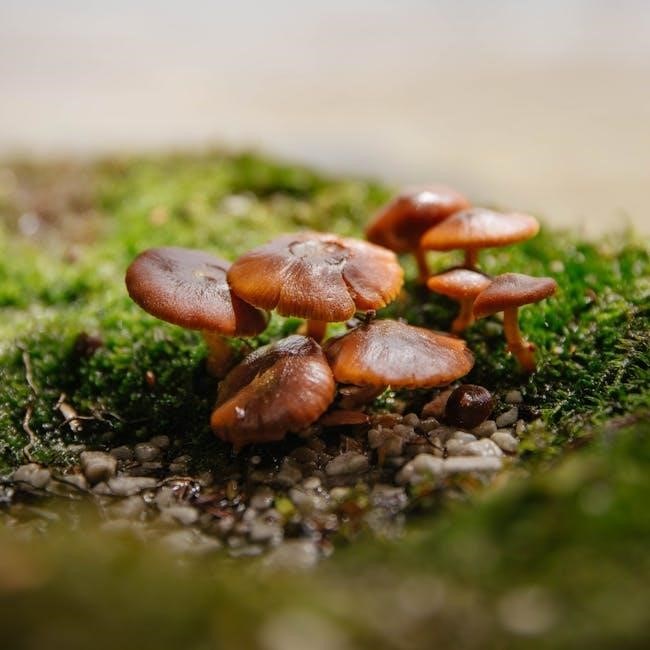
Identifying agarics requires careful observation of morphological features. These include gill attachment, spore print color, and the presence or absence of a volva or annulus. The FunKey app, available for both Android and iOS, provides a user-friendly platform for navigating this complex group, simplifying the identification process through interactive keys and character selection.
Boletes (Fungi-Boletes & Austroboletes)
Boletes, encompassing both Fungi-Boletes and Austroboletes, are a fascinating group of macrofungi distinguished by their pore-like undersurfaces rather than gills. Australian boletes display considerable diversity, including species like Boletellus obscurecoccineus. Identifying these fungi often relies on careful examination of pore color, stem characteristics, and bruising reactions.
A comprehensive field guide is essential for navigating the complexities of bolete identification. Key features to observe include the presence or absence of a net-like pattern (reticulation) on the stem, and any color changes upon bruising. Accurate identification requires attention to detail, as subtle differences can distinguish between various species within these genera.
Coral Fungi (Clavarias & Ramarias)
Coral fungi, represented by genera like Clavarias and Ramarias, are aptly named for their branching, coral-like appearance. These distinctive macrofungi exhibit a range of colors, from vibrant yellows and oranges to more subdued shades. A field guide is invaluable for differentiating between the numerous species found across Australia.
Identification often focuses on the branching pattern – whether it’s dichotomous (forking) or irregular – and the texture of the branches, which can be brittle or fleshy. Observing the attachment to the substrate (soil, wood) is also crucial. Detailed descriptions and photographic comparisons within a field guide aid in accurately classifying these visually striking, yet often challenging, fungi.
Resupinate Fungi
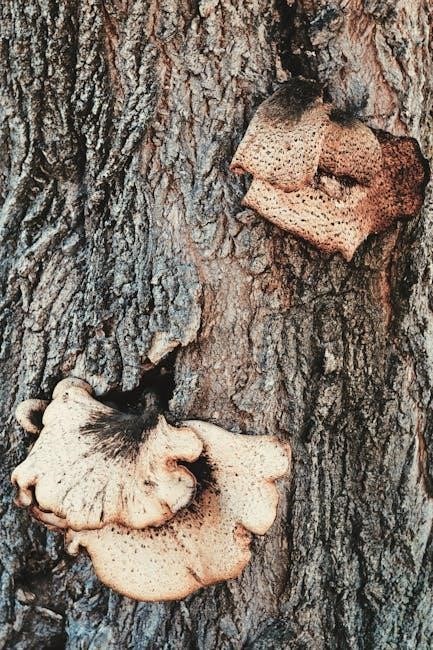
Resupinate fungi are a fascinating, yet often overlooked, group of macrofungi. They grow flat against their substrate – typically wood – resembling a crust or shelf. A comprehensive field guide is essential for identifying these fungi, as their subtle characteristics require close examination. Unlike typical mushrooms, they lack a distinct stipe (stem).
Key identification features include pore size and shape, hymenial color, and the texture of the surface. Some resupinate fungi are brightly colored, while others are more camouflaged. A field guide provides detailed descriptions and microscopic features, aiding in accurate classification. Recognizing these fungi contributes significantly to understanding forest ecosystems and fungal diversity in Australia.
Globular Fungi
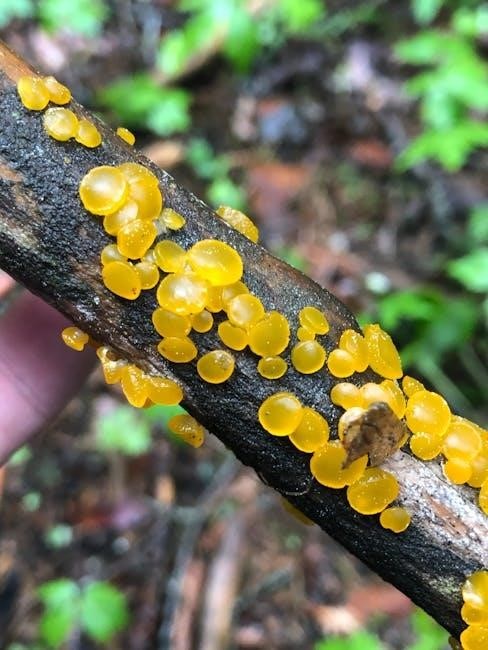
Globular fungi, often appearing as small, rounded or irregularly shaped structures, present a unique challenge for identification. A detailed field guide is paramount for distinguishing between the various species within this group. These fungi frequently lack the classic mushroom form, instead exhibiting gelatinous or warty exteriors.
Identification relies heavily on spore characteristics, internal structure, and substrate association. Color can vary significantly, ranging from white and cream to vibrant pinks and oranges. A good field guide will include microscopic details and habitat information, crucial for accurate determination. Understanding these often-cryptic fungi expands our knowledge of Australia’s hidden fungal biodiversity.
Identifying Australian Fungi
Accurate identification requires utilizing interactive keys like FunKey, Lucid guides, and careful observation of morphological characteristics – shapes, textures, and colors.
Using Interactive Keys (FunKey)
FunKey represents a significant advancement in Australian fungal identification, being the first comprehensive, interactive key specifically designed for the genera of agarics – commonly known as mushrooms and toadstools; This digital resource, available as an Android and iOS app, simplifies the often-complex process of identification.
Unlike traditional dichotomous keys, FunKey allows users to select characteristics, guiding them through a logical series of questions to narrow down potential matches. This user-driven approach is particularly valuable for both amateur and experienced mycologists. The key focuses on macrofungi exhibiting lamellae, providing a targeted resource for this conspicuous group. Its accessibility and ease of use make it an invaluable tool for field work and study, promoting a deeper understanding of Australia’s diverse fungal flora.
Lucid Guides for Smut and Rust Fungi
Lucid Guides offer specialized online identification resources focusing on Australian smut fungi (Ustilaginomycotina) and rust fungi (Pucciniales). Developed by IMA Fungus and published by Springer Nature, these guides streamline and enhance the accuracy of taxonomic identification at both the genus and species levels.
The key feature of these guides is their user-driven character selection. Instead of navigating a rigid key, users choose from available morphological traits, host range information, and geographical distribution data. This interactive approach simplifies identification, particularly for these often-challenging fungal groups. These resources are vital for researchers, plant pathologists, and anyone interested in understanding these economically and ecologically important fungi within the Australian landscape.
Morphological Characteristics for Identification
Accurate fungal identification relies heavily on detailed observation and recording of morphological characteristics. These features, noted while the fungi are fresh, are essential for utilizing identification keys and resources. Key aspects include carefully documenting shapes – whether they are mushroom-like, coral-shaped, or resupinate – and meticulously describing their textures, ranging from smooth and slimy to dry and fibrous.
Equally important is a precise record of colors, noting variations across different parts of the fruiting body. These observations, combined with details about size and any unique features, form the foundation for successful identification and contribute significantly to our understanding of Australian fungal diversity.
Shapes and Textures
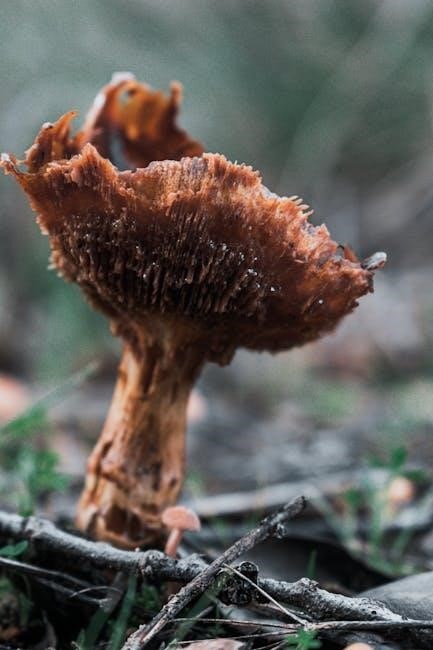
Fungal shapes exhibit remarkable diversity, ranging from the classic mushroom (agaric) with its cap and stem, to coral-like structures (coral fungi) and flattened, crust-like forms (resupinate fungi). Observing the overall form is a primary identification step. Textures are equally crucial; some fungi are smooth, slimy, or gelatinous, while others are dry, powdery, or covered in scales.
Detailed notes on surface textures – whether velvety, fibrous, or brittle – are vital. Consider if the surface is sticky when moist. These characteristics, combined with shape, provide initial clues for narrowing down potential identifications within a field guide, guiding users towards more specific features for confirmation.
Colors
Color documentation is paramount in fungal identification, though it can be deceptively complex. Fungi display a vast spectrum of hues, from vibrant reds and yellows to subtle browns and grays. However, color can vary with age, moisture levels, and even light exposure, necessitating careful observation.
A field guide user should record colors accurately, noting any variations within a single specimen – for example, a cap that is reddish-brown fading to pale yellow at the margin. Using standardized color charts can improve consistency. Remember that perceived color is subjective; detailed descriptions alongside color notes are essential for reliable identification.
Collecting and Recording Fungi
Detailed data recording at the point of collection is vital, as retrieving environmental information later is often impossible, ensuring high-quality data.
Importance of Data Recording at Collection
Meticulous data recording during fungal collection is paramount for robust scientific understanding. Information regarding associated plants and soil composition is often irretrievable if not noted immediately. This contextual data is crucial for understanding ecological relationships and distribution patterns.
Accurate records enable researchers to track fungal occurrences, monitor environmental changes impacting fungal communities, and contribute to conservation efforts. Detailed notes on habitat, substrate, and surrounding vegetation provide valuable insights into a species’ niche.
Furthermore, comprehensive data facilitates accurate identification and allows for future re-location and study of specimens. Without this initial, thorough documentation, the scientific value of a collected sample is significantly diminished.
Associated Plants and Soil
Documenting associated plants is vital, as many fungi form symbiotic relationships – mycorrhizae – with specific tree species. Noting the dominant vegetation, and even nearby plants, provides clues to a fungus’s ecological role and potential host range. Detailed records should include plant species, their health, and abundance.
Similarly, recording soil characteristics is essential. Observe soil type (sandy, loamy, clay), pH (if possible), moisture levels, and any visible organic matter. The substrate upon which the fungus grows – leaf litter, wood, dung – is also critical information.
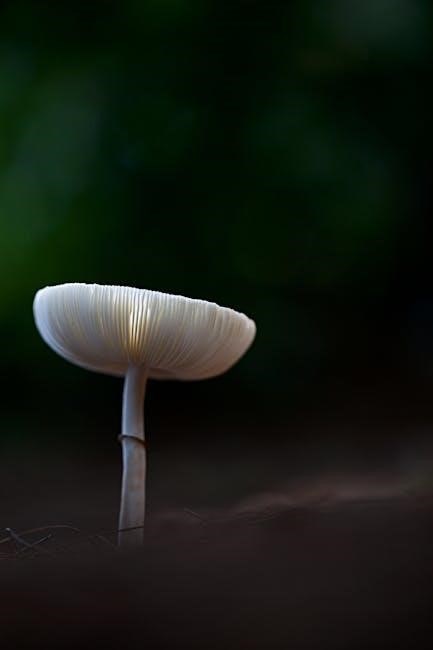
These environmental details, combined with fungal morphology, significantly aid in identification and understanding the fungus’s habitat preferences and distribution.
Geographic Distribution
Precise location data is paramount when recording fungi. Utilize GPS coordinates whenever possible, noting the latitude and longitude. If GPS isn’t available, meticulously document the location using landmarks, maps, and detailed descriptions. This information is crucial for tracking species ranges and understanding fungal biogeography.
Record the altitude and general habitat type – forest, grassland, desert, etc. – as these factors significantly influence fungal distribution. Note any regional variations or unusual occurrences. Contributing this data to online databases helps build a comprehensive picture of Australian fungal diversity.
Understanding where a fungus is found is key to identification and conservation efforts, especially given Australia’s vast and varied landscapes.
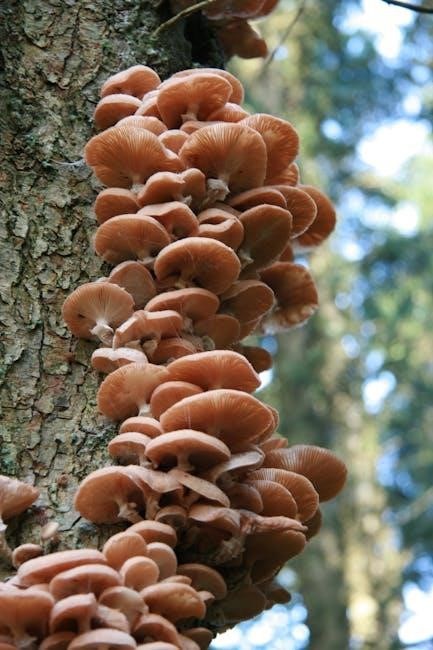
Poisonous and Edible Fungi in Australia
Caution is vital; never consume wild fungi without expert identification. Many toxic species exist, while safe foraging requires extensive knowledge and careful practice.
Common Toxic Species
Australia harbors several dangerously poisonous fungi demanding respect and cautious avoidance. The Amanita phalloides (Death Cap) is particularly notorious, responsible for the majority of fatal mushroom poisonings globally, and now established in several Australian states. Its unassuming appearance belies its deadly toxins. Cortinarius rubellus and related species also pose significant risks, causing kidney failure.
Furthermore, Galerina marginata, often found on decaying wood, contains the same toxins as the Death Cap. Identifying these species requires meticulous attention to detail, highlighting the necessity of reliable field guides and expert consultation. Misidentification can have severe, even fatal, consequences. Always err on the side of caution and avoid consuming any wild mushroom unless positively identified by a qualified mycologist.
Safe Foraging Practices
Responsible foraging necessitates a comprehensive understanding of fungal identification, prioritizing safety above all else. Never consume a mushroom unless you are 100% certain of its identity, utilizing multiple identification resources and ideally, expert verification. Begin with easily identifiable species and avoid those with white gills, a volva (cup-like structure at the base), or a ring on the stem – characteristics often associated with toxic varieties.
Always collect specimens with the base intact for accurate identification. Thoroughly document the location, habitat, and associated plants. Consume only a small portion initially, even with known edibles, to check for individual sensitivities. When in doubt, throw it out! A reliable field guide is your first line of defense, but knowledge and caution are paramount.
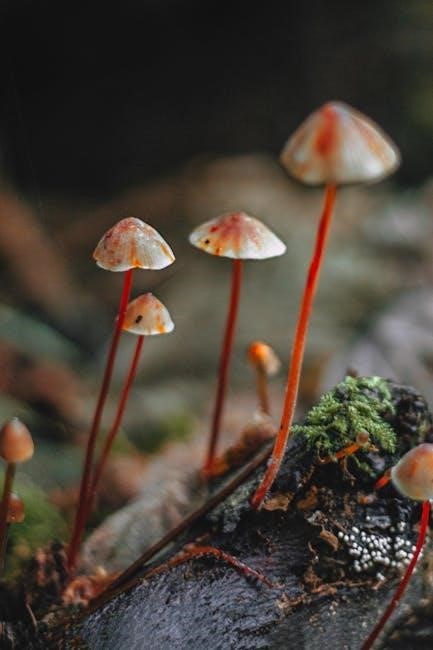
Resources for Further Study
FungiOz offers a website and app, alongside online databases and identification groups, providing valuable tools for continued learning and fungal exploration.
FungiOz Website and App
FungiOz stands as a premier resource for Australian fungal enthusiasts, offering a comprehensive website and a dedicated mobile application. This platform facilitates mushroom identification, featuring detailed descriptions and high-quality images of numerous species. The app, specifically, enables users to contribute sightings, aiding in mapping fungal distributions across the country.
Beyond identification, FungiOz fosters a vibrant community where users can connect, share observations, and seek expert advice. The website also provides access to articles, guides, and educational materials, enhancing understanding of Australian fungi. It’s a dynamic hub for both amateur and experienced mycologists, promoting citizen science and conservation efforts. The platform’s 3-step identification process is particularly helpful for beginners.
Online Databases and Identification Groups
Supplementing field guides, numerous online databases and identification groups bolster fungal knowledge in Australia. Platforms like Springer Nature’s IMA Fungus host Lucid guides, simplifying identification of smuts and rust fungi through user-selected characteristics – morphology, host range, and distribution. These guides promote accurate taxonomic classification.
Furthermore, Facebook groups dedicated to Australian fungi identification provide a collaborative environment. Enthusiasts share photos, seek expert opinions, and contribute to collective learning. These groups are invaluable for resolving tricky identifications and staying updated on recent discoveries. Utilizing these resources alongside traditional field guides significantly enhances one’s ability to navigate the diverse world of Australian mycology and contribute to ongoing research.