

Understanding Engine Idle and Manual Referrals
Understanding the interplay between engine idle, diagnostic codes, and the crucial role of a dedicated service manual is paramount for effective vehicle maintenance.
Properly interpreting “engine idled see manual” messages requires referencing specific procedures outlined within your vehicle’s repair documentation for accurate troubleshooting.
What Does “Engine Idled See Manual” Mean?
The diagnostic message “Engine Idled See Manual” typically indicates the Engine Control Module (ECM) has detected an issue affecting idle quality, but lacks sufficient data for a definitive self-diagnosis.
This isn’t a specific fault code, but rather a directive to consult the vehicle’s workshop manual for tailored troubleshooting steps. It suggests the ECM recognizes an idle problem – potentially low, high, or unstable – and requires technician intervention using manual diagnostic procedures.
The message emphasizes the need to access detailed information, diagrams, and specific testing protocols found exclusively in the service manual to pinpoint the root cause and implement the correct repair.
The Importance of Engine Idle
A stable and correct engine idle is fundamental to overall vehicle operation and longevity. It signifies the engine’s ability to maintain combustion without driver input, crucial for starting, stopping, and low-speed maneuvers.
An improper idle impacts fuel efficiency, emissions control, and can mask underlying issues within the fuel, ignition, or air intake systems. Addressing idle problems promptly prevents further damage and ensures optimal performance.
Furthermore, accurate idle settings are vital for certain systems, like those dependent on a boost pump, as noted in specific engine manuals, highlighting the need for precise adjustments.
Common Causes of Engine Idle Issues
Various factors contribute to idle problems, often necessitating a service manual for diagnosis. These include vacuum leaks, faulty sensors, and fuel system malfunctions impacting engine performance.
Low Idle Speed
A consistently low idle speed indicates the engine isn’t receiving enough air or fuel, or the timing is off, often prompting a “see manual” diagnostic message. This can stem from a dirty or failing Idle Air Control (IAC) valve restricting airflow, or a malfunctioning throttle position sensor (TPS) providing incorrect data to the engine control module (ECM).
Fuel delivery issues, like a clogged fuel filter or weak fuel pump, can also contribute. Referencing the vehicle’s service manual is crucial for identifying the correct idle speed specification and performing targeted tests on these components. Proper adjustment of control linkage, as detailed in the manual, may also be required to restore optimal idle performance.
High Idle Speed

A persistently high idle speed suggests the engine is receiving too much air or fuel, or a component is stuck open, potentially triggering a “see manual” alert. Common causes include a malfunctioning IAC valve stuck in an open position, a vacuum leak allowing unmetered air into the intake manifold, or a faulty TPS sending incorrect signals.
The service manual provides specific diagnostic procedures for pinpointing the source of the issue, including vacuum leak testing and component resistance checks. Adjusting control linkage, as outlined in the manual, might be necessary, but always address the underlying cause before attempting adjustments.
Rough or Unstable Idle
A rough or unstable idle, characterized by fluctuating RPMs, often indicates an issue with combustion or air-fuel mixture control, potentially prompting a “see manual” diagnostic step. This can stem from faulty spark plugs (gasoline engines), a dirty or failing MAF sensor providing inaccurate readings, or inconsistent fuel delivery.
Consulting the service manual is crucial for identifying engine-specific diagnostic procedures, like data stream analysis from the ECM. The manual will guide you through checking for vacuum leaks and evaluating the performance of the IAC valve, ensuring a stable and efficient idle.

Diagnostic Steps ⸺ Initial Checks
Begin by verifying secure engine connections and meticulously inspecting all vacuum lines for leaks, as these are common causes flagged by “see manual” alerts.
Checking Engine Connections
A thorough inspection of all electrical connectors associated with the engine’s idle control system is a critical first step. Ensure each connector is firmly seated and free from corrosion, which can disrupt signal transmission and trigger an “engine idled see manual” message.
Pay close attention to the Idle Air Control (IAC) valve, Throttle Position Sensor (TPS), and Mass Airflow Sensor (MAF) connections. Disconnect and reconnect each connector to verify a secure fit. Look for any signs of damaged wiring or frayed insulation. A compromised connection can lead to inaccurate readings and unstable idle conditions, necessitating a manual diagnostic review.
Inspecting Vacuum Lines for Leaks
Vacuum leaks are a frequent cause of erratic engine idle and can trigger a “engine idled see manual” diagnostic prompt. Carefully examine all vacuum lines connected to the intake manifold, throttle body, and other engine components.
Look for cracks, splits, or disconnections. A simple method for detecting leaks is to spray a small amount of carburetor cleaner or soapy water around the lines while the engine is running; bubbles will indicate a leak. Replace any damaged lines immediately. Remember to consult your vehicle’s service manual for the correct routing and specifications of vacuum lines, ensuring proper engine operation.
Fuel System Examination
A malfunctioning fuel system can significantly impact engine idle quality, potentially leading to a “engine idled see manual” indication. Begin by checking the fuel filter for restrictions – a clogged filter limits fuel flow.

Inspect the fuel pump for adequate pressure, referencing the specifications in your vehicle’s service manual. Examine fuel injectors for proper spray patterns and leaks. A faulty fuel pressure regulator can also cause idle issues. Thoroughly assess the entire fuel delivery system, as inadequate or inconsistent fuel supply directly affects engine performance and stability.

Specific Components to Investigate
Focusing on the Idle Air Control (IAC) valve, Throttle Position Sensor (TPS), and Mass Airflow Sensor (MAF) is vital when addressing “engine idled see manual” issues.
Idle Air Control (IAC) Valve
The Idle Air Control (IAC) valve regulates air bypassing the throttle plate at idle, directly impacting engine smoothness and RPM. When encountering an “engine idled see manual” scenario, a malfunctioning IAC valve is a prime suspect.
Inspect the IAC valve’s electrical connector, ensuring it’s securely attached and free from corrosion. Vacuum leaks around the IAC valve gasket can also cause issues; carefully examine for any cracks or deterioration.
Refer to your vehicle’s service manual for specific testing procedures, often involving using a scan tool to command the IAC valve open and closed, observing its response. Cleaning the IAC valve may resolve minor issues, but replacement might be necessary if it’s faulty.
Throttle Position Sensor (TPS)
The Throttle Position Sensor (TPS) informs the engine control module (ECM) about the throttle plate’s angle, crucial for idle control. An inaccurate TPS signal can lead to unstable idle or an “engine idled see manual” diagnostic message.
Begin by checking the TPS connector for secure attachment and corrosion. Use a multimeter to verify the TPS voltage readings across its range of motion, comparing them to the specifications in your vehicle’s service manual.
A scan tool can display live TPS data, aiding in identifying erratic or non-linear readings. If the TPS fails testing, replacement is typically required, ensuring proper engine operation and idle stability.
Mass Airflow Sensor (MAF)
The Mass Airflow Sensor (MAF) measures the amount of air entering the engine, directly impacting fuel delivery and idle quality. A faulty MAF sensor can cause incorrect air-fuel mixtures, resulting in a rough idle or triggering an “engine idled see manual” error code.
Inspect the MAF sensor connector and wiring for damage. Use a scan tool to monitor MAF sensor readings; values should correlate with engine speed and load. Cleaning the MAF sensor with a dedicated MAF cleaner may resolve minor issues.
If cleaning doesn’t help, consult your service manual for specific testing procedures and replacement guidelines.
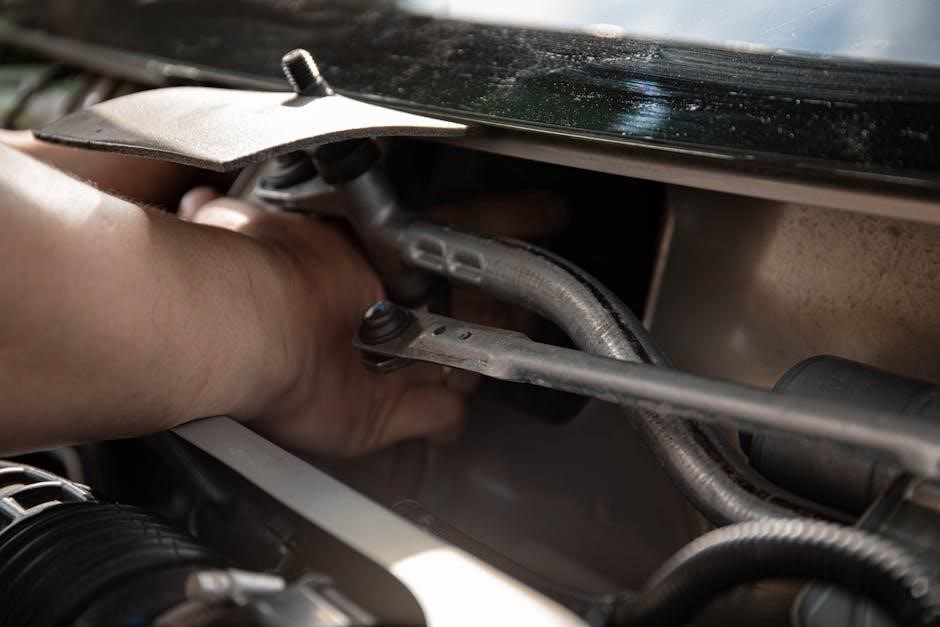
Troubleshooting with a Service Manual
A vehicle-specific service manual is essential for deciphering “engine idled see manual” messages and accessing detailed diagnostic procedures and component specifications.
Locating the Correct Manual
Securing the appropriate service manual for your specific engine and vehicle model is the foundational step in resolving an “engine idled see manual” diagnostic indication.
Often, these manuals are available through the vehicle manufacturer’s website, dedicated automotive parts retailers, or online subscription services offering repair information. Ensure the manual corresponds precisely to the year, make, and model of your vehicle, as procedures can vary significantly.
Look for manuals detailing engine management systems and troubleshooting guides. Digital versions offer convenient search functionality, while physical copies provide a tangible reference during repairs. Confirm the manual includes detailed diagrams and specific diagnostic flowcharts related to idle control systems.
Understanding Manual Diagrams
Service manual diagrams are essential for deciphering the complex systems affecting engine idle, particularly when a “engine idled see manual” message appears.
These diagrams illustrate component locations, wiring schematics, and vacuum line routing – critical for identifying potential faults. Pay close attention to illustrations depicting the Idle Air Control (IAC) valve, Throttle Position Sensor (TPS), and Mass Airflow Sensor (MAF), as these frequently contribute to idle issues.
Understanding the flow of signals and vacuum is key. Diagrams often use color-coding and symbols; familiarize yourself with the manual’s key to interpret them accurately.
Following Specific Diagnostic Procedures
When faced with an “engine idled see manual” indication, the service manual’s diagnostic procedures become your roadmap to resolution.
These procedures typically begin with basic checks – verifying connections and inspecting vacuum lines for leaks – before progressing to more advanced steps. The manual will guide you through testing components like the IAC valve, TPS, and MAF, often specifying resistance values or voltage ranges.
Strictly adhere to the manual’s sequence; skipping steps can lead to misdiagnosis. Document each test result meticulously, as this aids in pinpointing the root cause efficiently.

Advanced Troubleshooting Techniques
Employing data stream analysis via a scan tool and performing compression tests are vital when initial diagnostics, guided by the manual, prove inconclusive.
Data Stream Analysis (ECM)
Analyzing data streams from the Engine Control Module (ECM) provides invaluable insights when addressing idle issues flagged by a “see manual” message. This technique allows technicians to observe real-time sensor readings, like the Mass Airflow (MAF) sensor and Throttle Position Sensor (TPS), crucial for idle control.
A service manual is essential for interpreting these values, establishing baseline expectations, and identifying deviations indicating component malfunction or system imbalances. Examining fuel trim data, ignition timing, and coolant temperature can pinpoint the root cause. The ECM data report, created by the repair shop, offers a snapshot of engine performance, aiding in precise diagnostics and targeted repairs, especially when standard procedures fall short.
Using a Scan Tool for Live Data
Employing a scan tool to access live data is a cornerstone of modern engine diagnostics, particularly when encountering a “engine idled see manual” indication. This allows observation of parameters like IAC valve position, short and long-term fuel trims, and engine RPM in real-time.
Comparing these values against manufacturer specifications – found within the vehicle’s service manual – reveals anomalies. Observing how these parameters change during idle and throttle transitions can isolate the source of the problem. A scan tool facilitates a dynamic assessment, surpassing static tests, and guiding technicians toward effective solutions for stable engine operation.
Compression Testing
When faced with a persistent “engine idled see manual” issue, compression testing becomes a vital diagnostic step, assessing the mechanical health of the engine’s cylinders. Low compression indicates potential problems like worn piston rings, valve issues, or head gasket failures, all impacting idle quality.
Comparing compression readings across all cylinders reveals imbalances. The service manual provides specific compression specifications for your engine. Significant deviations necessitate further investigation. This test helps determine if the idle problem stems from mechanical deficiencies rather than sensor or control system malfunctions, guiding repair efforts effectively.

Manual Adjustments and Settings
Referencing the service manual is essential for precise adjustments to control linkage, regulators, and idle speed, resolving “engine idled see manual” scenarios.
Adjusting Control Linkage
When encountering an “engine idled see manual” situation, meticulously inspecting and adjusting the control linkage is a fundamental step. The service manual provides detailed diagrams and specifications for your specific engine. Begin by verifying the throttle cable isn’t binding or excessively loose, ensuring smooth operation.
Loosen the linkage adjustment screws, allowing for slight movement. Carefully follow the manual’s instructions to adjust the linkage, aiming for the correct throttle plate opening at idle. On vehicles with manual transmissions, perform this adjustment with the engine idling. Precise linkage adjustment directly impacts idle speed and stability, often resolving the diagnostic message.
Regulator Adjustment
If an “engine idled see manual” message persists, the fuel regulator may require adjustment, as detailed in your vehicle’s service manual. This component maintains consistent fuel pressure, vital for stable idling. Locate the regulator adjustment screw – its position varies by engine type – and consult the manual for the correct turning direction to increase or decrease fuel pressure.
Adjust in small increments, monitoring the engine’s response. Improper fuel pressure can cause rough idling or stalling. Always verify the adjustment against the manufacturer’s specifications found within the manual. Accurate regulator adjustment is crucial for optimizing engine performance and resolving idle-related diagnostic codes.
Idle Speed Adjustment Procedures
When facing an “engine idled see manual” situation, precise idle speed adjustment, guided by your vehicle’s service manual, is often necessary. Begin by ensuring the engine is at operating temperature. Locate the idle speed screw, typically on the throttle body. Consult the manual for the correct procedure – some vehicles require a scan tool for electronic idle speed control.
Adjust the screw incrementally, observing the engine’s RPM. Aim for the manufacturer’s specified idle speed. Incorrect adjustment can lead to stalling or excessively high idling. Always double-check your work against the manual’s specifications to ensure optimal engine operation and resolve the diagnostic message.

Engine Specific Considerations
Diesel engines exhibit different idle characteristics than gasoline engines, and some require a functional boost pump for stable idling, as detailed in the operator’s manual.
Diesel Engine Idle Characteristics
Diesel engines generally idle at lower RPMs compared to gasoline engines, often around 600-800 RPM. Achieving a smooth idle relies heavily on proper fuel delivery and compression. Unlike gasoline engines, diesels don’t use a throttle plate to control airflow during idle; instead, fuel quantity regulates engine speed.
If an “engine idled see manual” message appears, consult the service manual for diesel-specific diagnostic procedures. Issues can stem from injector problems, low compression, or a malfunctioning fuel pump. Remember, some diesel engines are boost pump dependent for idling, meaning the pump must function correctly to maintain operation, as noted in manufacturer documentation.
Gasoline Engine Idle Characteristics
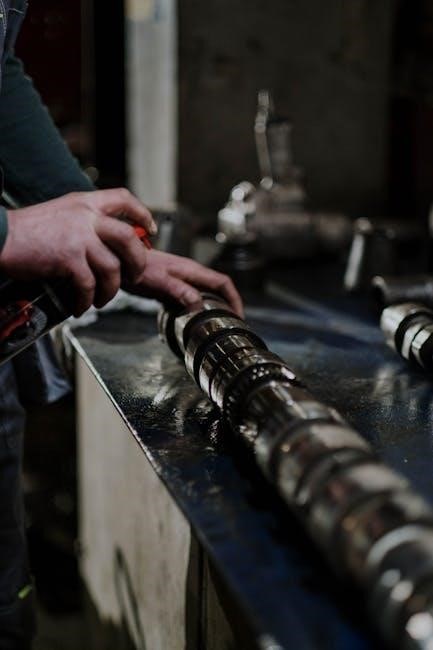
Gasoline engines typically idle between 600-1000 RPM, controlled by the throttle body and Idle Air Control (IAC) valve. A stable idle depends on a precise air-fuel mixture, proper ignition timing, and vacuum leak absence. When encountering an “engine idled see manual” message, the service manual becomes essential for pinpointing the root cause.
Common culprits include a faulty IAC valve, a dirty throttle body, or issues with the Mass Airflow Sensor (MAF). Referencing the manual’s troubleshooting steps, alongside data stream analysis from the ECM, will guide accurate diagnosis and repair, ensuring optimal engine performance.
Boost Pump Dependency (Specific Engines)
Certain engines, particularly those with turbochargers or superchargers, rely on a boost pump to maintain adequate fuel pressure at idle. If the “engine idled see manual” message appears, and the engine won’t idle unless the boost pump is active, the manual is critical.
This indicates a potential fuel delivery issue – a failing pump, clogged filter, or faulty pressure regulator. The operator’s manual will specify minimum and maximum pressure limits. Diagnostic procedures, detailed in the service manual, will help isolate the problem and restore stable idling performance.
Preventative Maintenance for Stable Idle
Regular maintenance – air and fuel filter replacements, and spark plug inspections – proactively prevents idle issues and minimizes the chance of encountering an “engine idled see manual” error.
Regular Air Filter Replacement
A clean air filter is fundamental for maintaining a stable engine idle. Restrictions caused by a clogged filter disrupt the air-fuel mixture, potentially triggering an “engine idled see manual” diagnostic message. Regularly inspecting and replacing the air filter – typically every 12,000 to 15,000 miles, or as recommended in your vehicle’s service manual – ensures optimal airflow.
Insufficient airflow can lead to a lean fuel condition, causing rough idling or stalling. Conversely, an excessively dirty filter can strain the engine, impacting performance. Prioritizing air filter maintenance is a simple, cost-effective step towards preventing idle problems and avoiding more complex repairs detailed within your vehicle’s manual.
Fuel Filter Maintenance
Maintaining a clean fuel filter is critical for consistent fuel delivery and a stable engine idle. A clogged fuel filter restricts fuel flow, potentially causing a lean condition and triggering an “engine idled see manual” error. Regular replacement, typically every 20,000 to 30,000 miles or as specified in your vehicle’s service manual, is essential.
Restricted fuel flow can manifest as rough idling, hesitation during acceleration, or even engine stalling. Ignoring fuel filter maintenance can also damage the fuel pump. Consult your vehicle’s manual for the correct filter type and replacement procedure to ensure optimal engine performance and prevent further diagnostic issues.
Spark Plug Inspection/Replacement (Gasoline Engines)
For gasoline engines, faulty spark plugs are a common cause of unstable idle and can trigger an “engine idled see manual” diagnostic message. Worn or fouled spark plugs result in incomplete combustion, leading to misfires and a rough-running engine. Inspect spark plugs periodically – typically every 30,000 to 100,000 miles – and replace them as needed, following the intervals outlined in your vehicle’s service manual.
Proper spark plug function ensures efficient combustion, contributing to a smooth idle. Using the correct spark plug type, as specified in your manual, is crucial for optimal performance and preventing further engine issues.